The best ultrasound machines for cattle help veterinarians, livestock producers, and farm managers monitor reproduction and perform large-animal examinations.
The right system depends on whether you primarily need pregnancy detection, breeding management, or general veterinary imaging. This guide covers cattle, buffalo, and bison, collectively referred to as bovines, and compares the best ultrasound machines for cattle to help you choose the right equipment.
What Is a Bovine or Cattle Ultrasound Machine Used For?
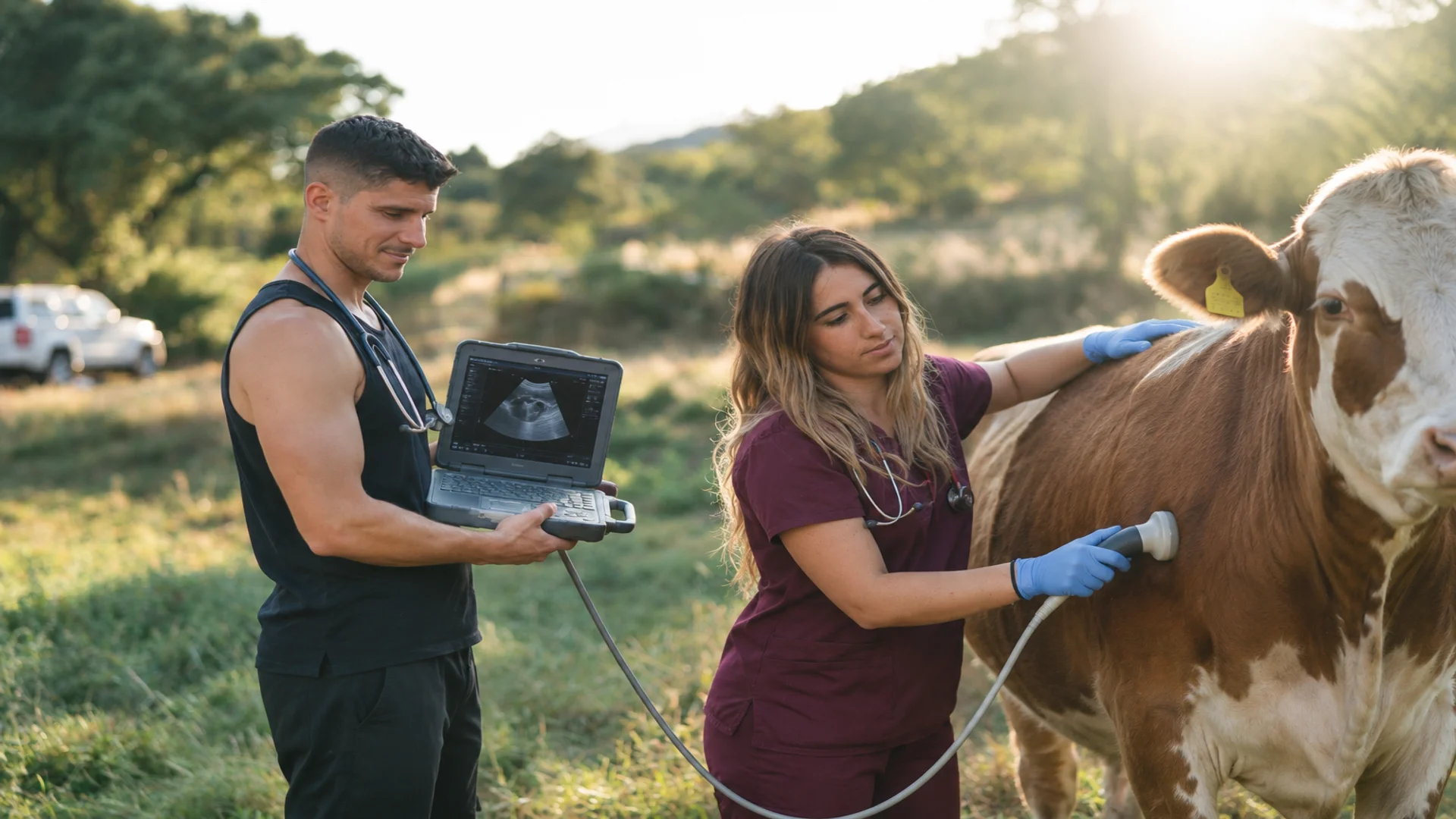
A bovine ultrasound machine is a diagnostic imaging system designed to examine large animals, particularly their reproductive organs and developing fetuses.
Unlike other ultrasound machines that are used for general human imaging, cattle ultrasound examination may include specialized rectal probes, extended scanning handles, and features designed for field conditions.
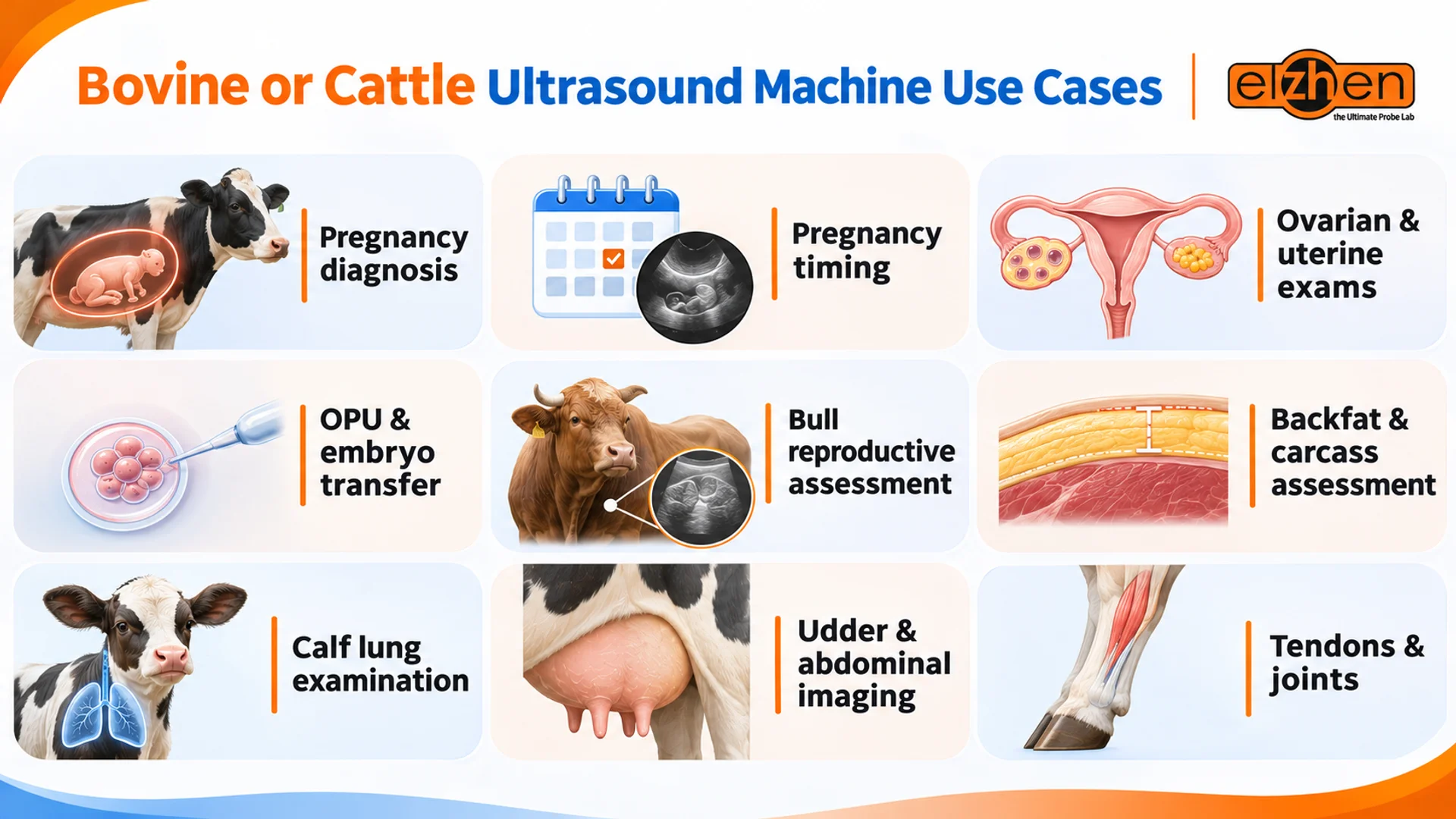
Common applications of an ultrasound machine for cattle include:
Pregnancy diagnosis
Transrectal ultrasound identifies pregnancy, fetal heartbeat, twins, and developmental stages. As a result, veterinarians can assess reproductive status earlier and in greater detail than palpation alone.
Pregnancy timing
Trained operators can detect pregnancy around day 28–30; fetal sexing is generally performed around days 60–90, depending on fetal development and examination technique.
Ovarian and uterine examination
Ultrasound visualizes ovarian follicles, corpus luteum, and uterine abnormalities, while Doppler can help evaluate blood flow during reproductive assessments.
Ovum pick-up (OPU) and embryo transfer
Specialized transvaginal probes, needle guides, and aspiration equipment support follicle collection and advanced bovine reproductive procedures.
Bull reproductive assessment
Scrotal ultrasound helps characterize visible testicular abnormalities, but it does not replace semen evaluation or a complete breeding soundness examination.
Backfat and carcass assessment
Trained technicians use specialized ultrasound equipment to measure fat thickness and muscle characteristics for livestock selection and carcass evaluation.
Calf lung examination
Thoracic ultrasound helps veterinarians identify lung lesions in calves and assess respiratory conditions during herd health investigations.
Udder and abdominal imaging
External ultrasound can examine udder tissues and selected abdominal organs, helping investigate abnormalities beyond reproductive health.
Tendons and joints
Suitable high-frequency linear probes visualize superficial soft tissues, supporting examinations of tendon injuries and musculoskeletal abnormalities.
Key Features to Look for in a Cattle Ultrasound Machine
Before introducing the best cattle ultrasound machines, let’s review the features that matter when selecting a system for bovine examinations.
The right equipment should match your herd, working environment, and primary scanning tasks. In particular, consider the probe configuration, handling method, image display, durability, portability, and battery performance. These factors can make a significant difference when examinations take place in barns, livestock facilities, or remote farms.
Important buying considerations include:
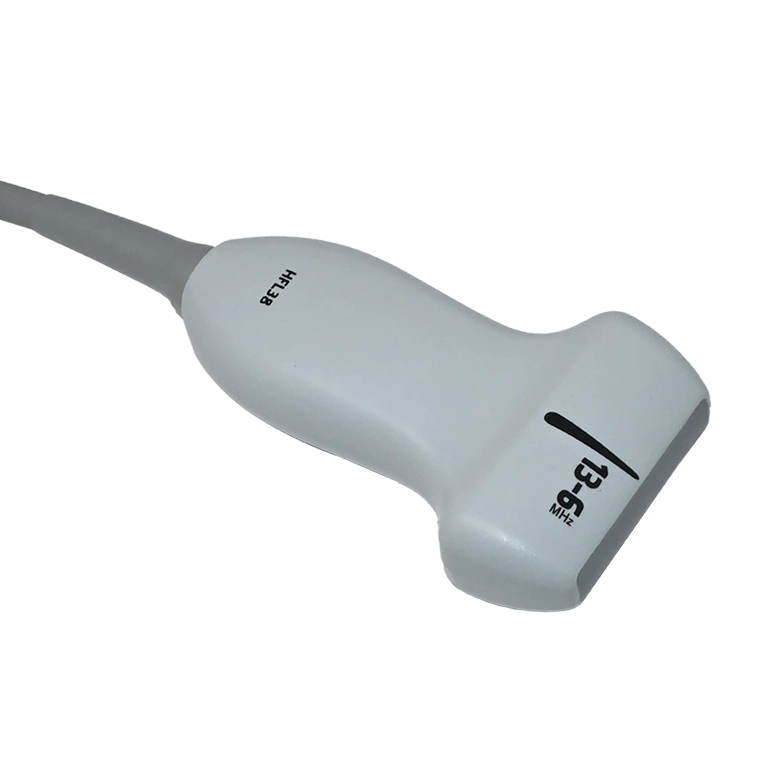
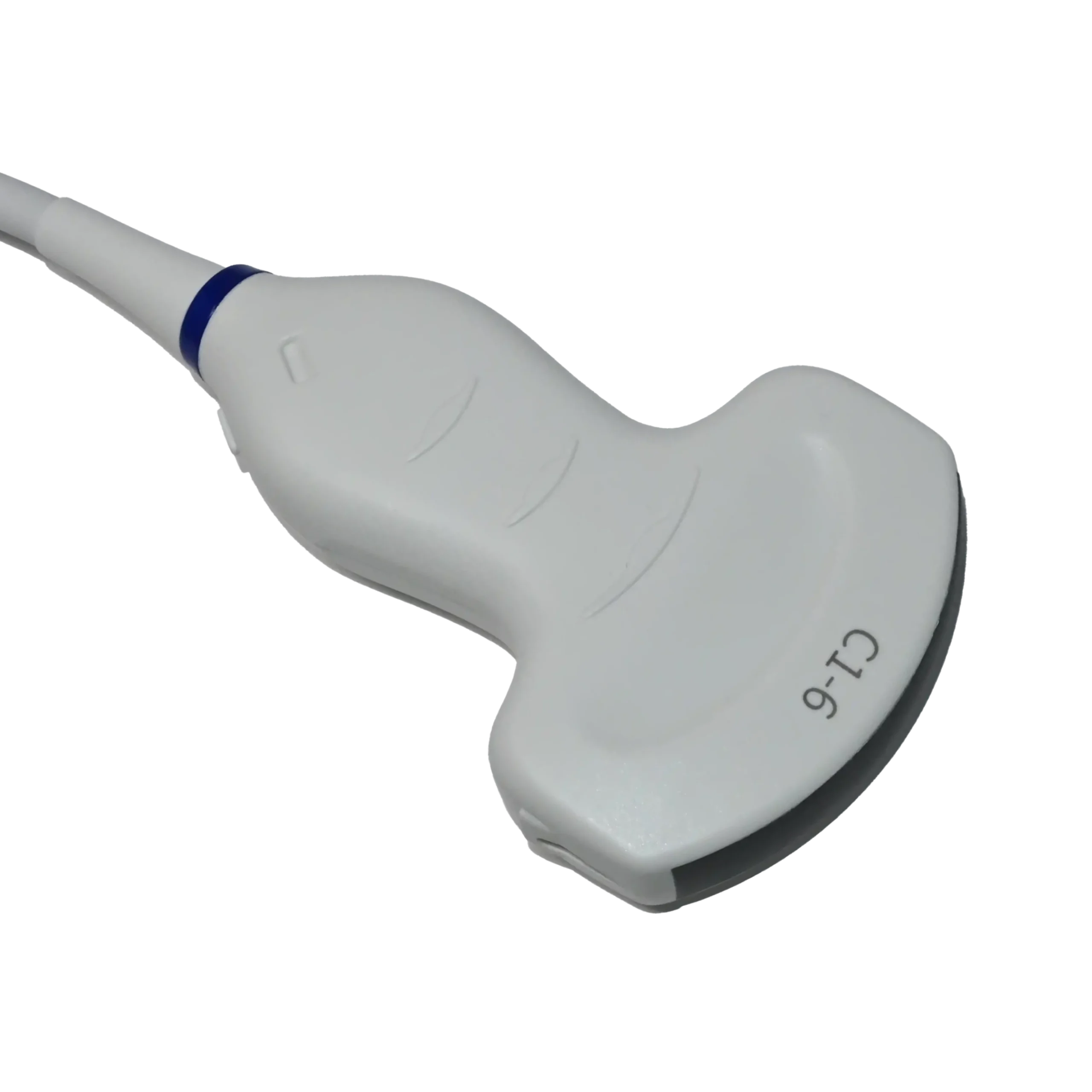
- Probe type: Choose a compatible rectal linear probe for reproductive examinations, while convex and micro-convex probes support deeper abdominal and external imaging.
- Arm-in-cow vs. extension-arm scanning: Consider whether you prefer holding the rectal probe directly or using an extended handle to improve positioning and operator comfort.
- Screen, goggles, and wireless viewing: A conventional monitor offers a larger image, whereas goggles and wireless displays can improve visibility during examinations in confined working positions.
- Durability and waterproofing: Look for a robust housing, protected connectors, and documented ingress protection ratings suitable for the demanding conditions of livestock facilities.
- Battery life and portability: A portable system with dependable battery performance is useful when moving between cattle pens, farms, and examination locations. You can explore our range of ultrasound batteries when evaluating replacement or backup power options.
- Beef vs. dairy requirements: Beef operations may prioritize portability and rapid herd pregnancy checks, while dairy practices may benefit from additional reproductive and general diagnostic capabilities.
Best Portable Ultrasound Machines for Cattle Examination
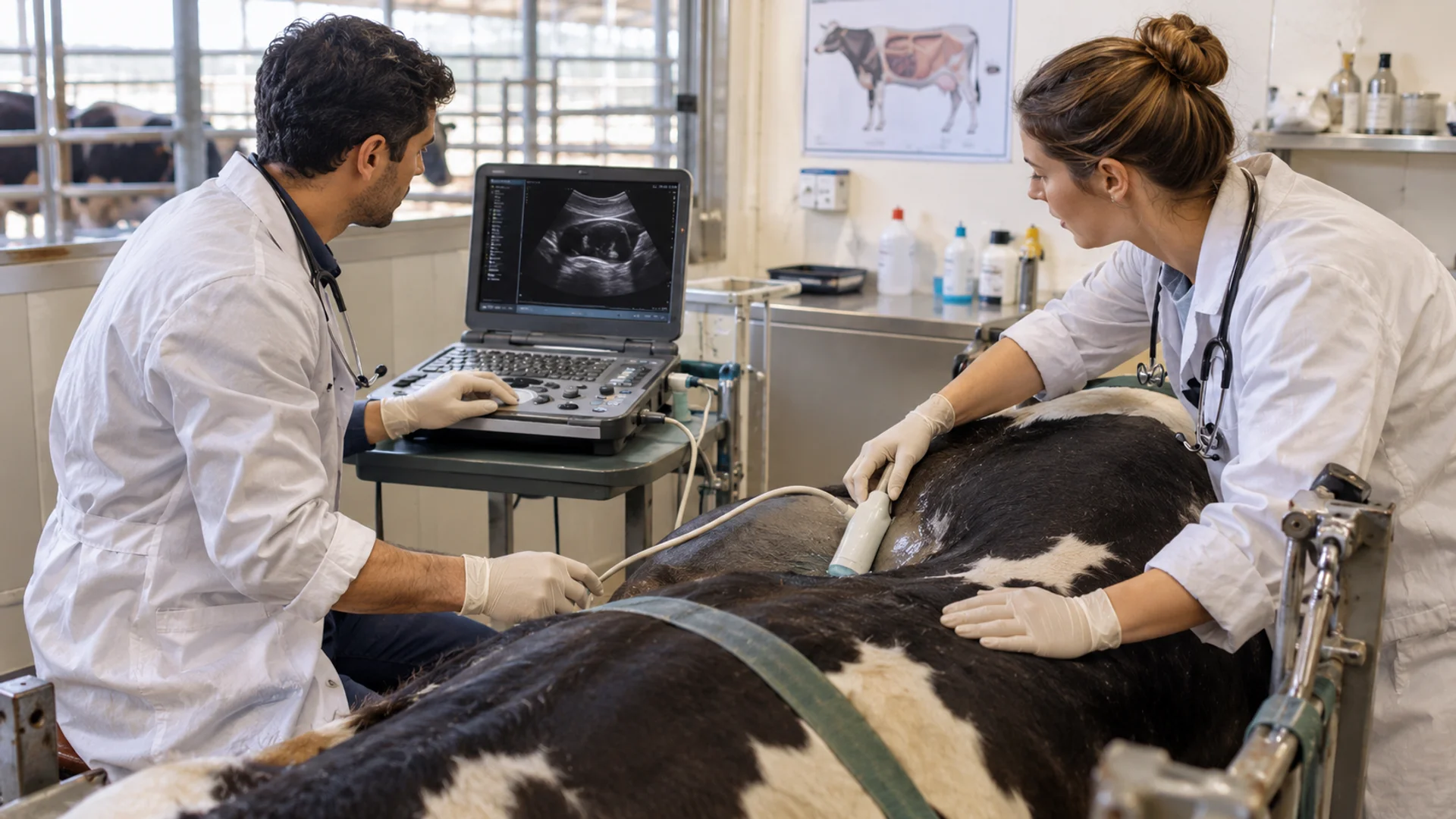
The following three portable systems are worth considering when evaluating a bovine ultrasound machine. However, the right choice depends on the available transducers and system configuration, particularly if reproductive examinations are your main priority.
Mindray DP-30 Vet Ultrasound: Cattle Doppler Imaging
The Mindray DP-30 Vet is a portable veterinary ultrasound system designed for multiple animal examinations, including bovine reproductive imaging. Its Doppler capabilities make it particularly interesting for practices requiring more than routine B-mode scanning.

Key features:
- Power Doppler: Helps visualize blood flow in selected reproductive and vascular examinations.
- PW Doppler: Provides additional information about blood-flow characteristics.
- Tissue Harmonic Imaging (THI): Improves contrast resolution, particularly in technically challenging imaging situations.
The manufacturer’s documentation explicitly includes bovine examinations among the system’s intended applications. However, confirm the compatible rectal transducer and its availability before purchasing.
Mindray DP-10 Vet Ultrasound: Cattle Routine Examination
The Mindray DP-10 Vet is a veterinary B-mode ultrasound system designed for practices seeking essential imaging capabilities. Its straightforward configuration makes it worth considering for routine veterinary examinations when advanced Doppler functions are not a priority.

Key features:
- PW Doppler: Provides blood-flow information for supported examinations.
- Tissue Harmonic Imaging: Improves contrast resolution and image quality.
- iClear imaging: Reduces speckle artifacts and helps produce clearer tissue boundaries.
The DP-10 Vet is a potential option for routine cattle imaging, provided the required veterinary transducer and system configuration are compatible.
GE LOGIQ e Ultrasound: Cattle General Imaging
The GE LOGIQ e is a compact, laptop-style ultrasound system designed for multipurpose imaging in small and large animals.
It is particularly interesting for mixed veterinary practices that need a portable platform for different examination types, including large-animal applications.

Key features:
- Portable design: Supports imaging across different clinical and examination environments.
- Multiple transducer options: Allows different imaging applications when compatible probes are selected.
- Advanced imaging tools: Available configurations offer features supporting visualization and examination workflows.
Looking for more veterinary ultrasound options?
If you are a veterinarian or practice manager looking beyond cattle imaging, explore our guide to the best veterinary ultrasound machines, where we compare 10 veterinary ultrasound systems for different animal examinations.
Best Veterinary Ultrasound Machines
Best Cattle Ultrasound Machines Comparison at a Glance
Here is a quick comparison of the three best cattle ultrasound machines discussed above. This overview highlights their main imaging capabilities and helps you identify which system may better match your veterinary practice.
| Model | Imaging capabilities | Main advantage | Consideration |
| Mindray DP-30 Vet | B-mode, Power Doppler, PW Doppler | Advanced imaging options | Confirm rectal probe compatibility |
| Mindray DP-10 Vet | B-mode, PW Doppler | Essential veterinary imaging | No Power Doppler listed in the manufacturer’s product overview |
| GE LOGIQ e | Configuration-dependent imaging and Doppler | Multipurpose veterinary applications | Verify model generation and probe configuration |
These are application-based comparisons rather than a definitive performance ranking. Actual image quality and suitability depend on the transducer, software, configuration, and operator experience.
Cattle Ultrasound Probes: Types, Care, and Replacement
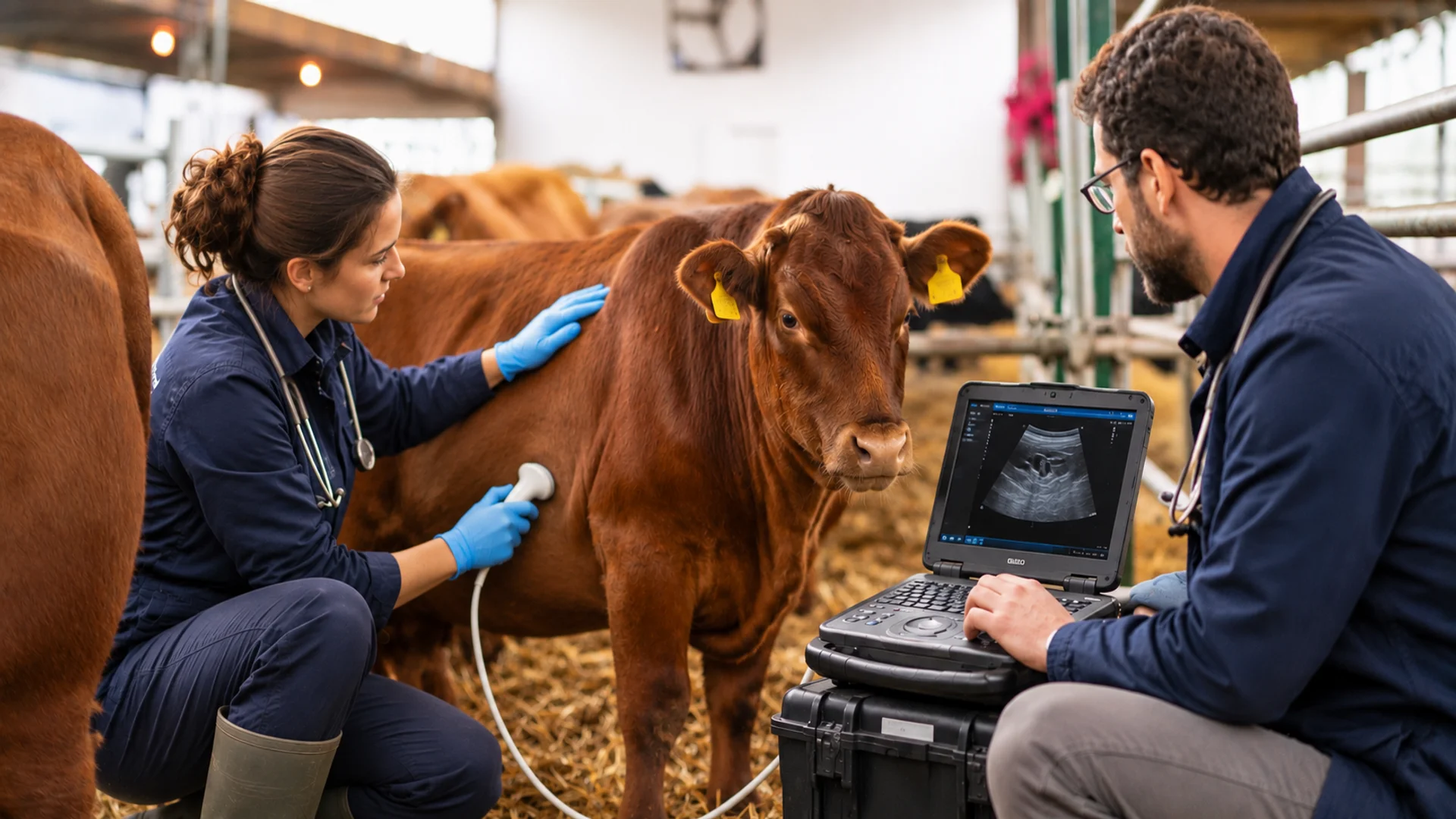
By now, you should have a better understanding of cattle ultrasound machines and their applications. However, the machine itself is only part of the imaging system. Choosing the right transducer is equally important, as different cattle examinations may require different probes depending on the scanning application.
Before purchasing, check the supported veterinary ultrasound transducer models and connector compatibility to ensure the machine meets your requirements.
How Can You Repair or Replace a Cattle Ultrasound Probe?
Regular use of vet probes can gradually affect probe performance, particularly in demanding veterinary environments. As explained in our article about common signs of ultrasound probe failure, visible cracks, damaged cables, dark lines in ultrasound images, and unusual image noise may indicate a problem with the transducer.
However, replacing a damaged transducer is not always necessary. Depending on the type and severity of the problem, professional repair may restore its functionality and help reduce replacement expenses. Elzhen offers professional ultrasound probe repair services and uses the Elzhen 2200 Smart Transducer Analyzer to evaluate electronic array probes. The analyzer can identify dead and weak elements, helping technicians assess probe condition. Elzhen also provides a replacement device during the repair process to help reduce equipment downtime.

Final Thoughts on a Cattle Ultrasound Machine
Choosing the right cattle ultrasound system comes down to the examinations you perform most often. Practices that evaluate ovarian activity or blood flow will benefit from the Doppler functions of the Mindray DP-30 Vet. Those focused on routine B-mode imaging may find the Mindray DP-10 Vet sufficient, while the GE LOGIQ e suits mixed-species clinics that need a single portable platform.
Regardless of the model, system performance depends heavily on the transducer. Before purchasing, verify that a compatible rectal probe is available and matches the machine’s connector.
For more information on ultrasound machines for cattle, the Elzhen team can also advise on a refurbished configuration that fits your herd size and budget.