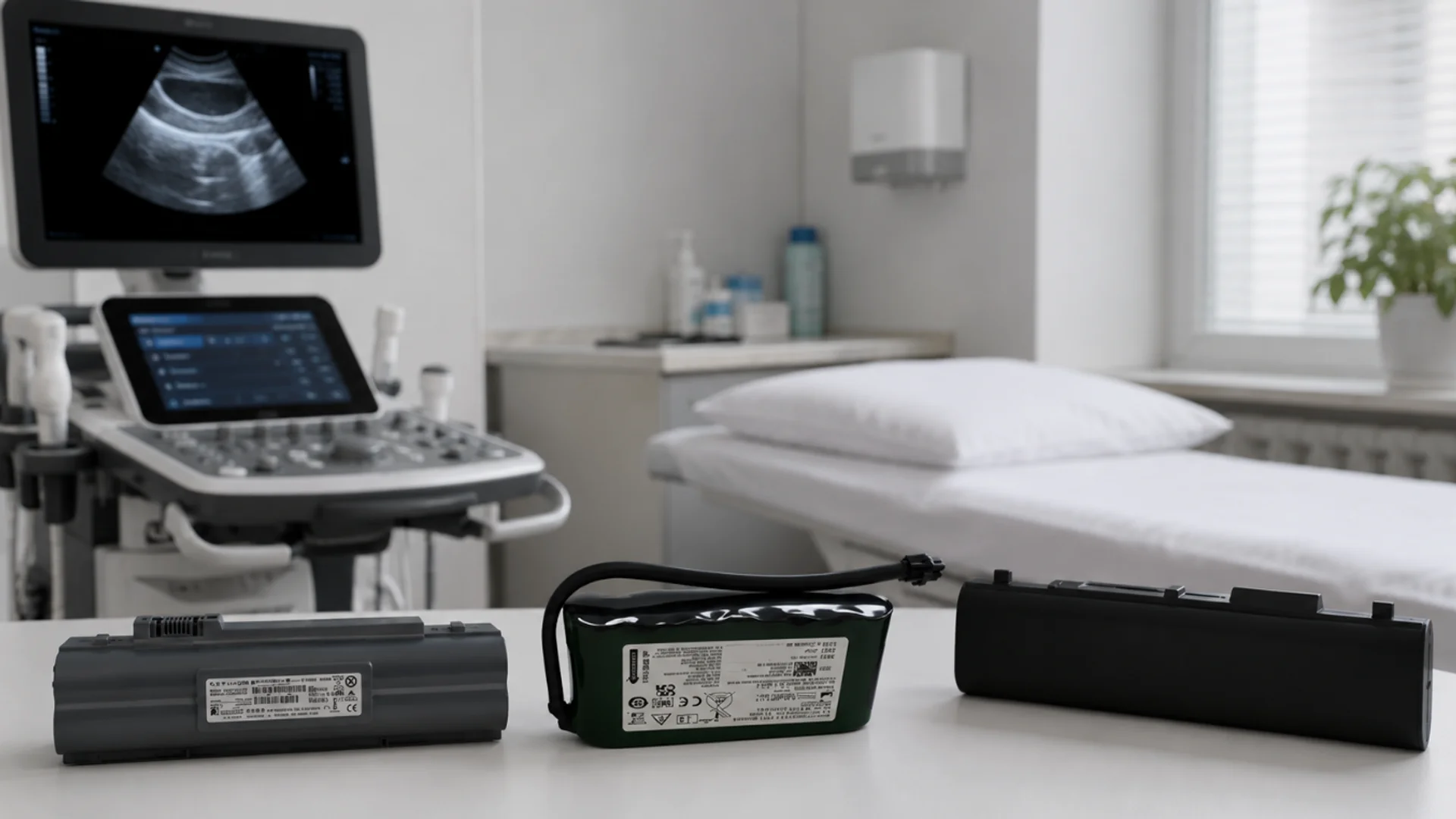
A portable ultrasound is only as portable as its battery allows it to be. Like other rechargeable batteries, ultrasound batteries gradually lose capacity with use and age, eventually reducing the operating time available between charges.
So, how long should a portable ultrasound battery actually last, and what can you do to extend its useful life?
In this article, we’ll explain what affects portable ultrasound battery life, how to maintain portable ultrasound battery health, and how to recognize when a battery is approaching the end of its service life.
Why Portable Ultrasound Battery Health Matters in Critical Care

In critical care, portable ultrasound is often used at the bedside when moving a patient to another department is difficult, time-consuming, or impractical. This makes reliable ultrasound battery performance especially important in intensive care units, emergency settings, and other busy clinical environments.
A healthy battery allows the system to move between patients and operate away from a fixed power source. As battery performance declines, shorter runtimes and more frequent charging can limit this flexibility. Proper battery care can help extend portable ultrasound battery life, keeping the system ready for routine examinations and time-sensitive bedside use.
5 Ways to Extend the Portable Ultrasound Battery Life

Whether you are maintaining a newer portable system or one of the many refurbished ultrasound machines used in clinical settings, battery care can make a difference in how well the system performs over time.
Proper charging, suitable storage temperatures, clean battery contacts, effective power-management settings, and calibration when recommended can all help extend portable ultrasound battery life.
Below are five practical ways to help extend portable ultrasound battery health.
1. Optimize Your Charging Cycles
Like smartphone and laptop batteries, portable ultrasound batteries gradually lose capacity through repeated charging and discharging. Replacement lithium-ion batteries for medical equipment generally experience more stress when repeatedly discharged to very low levels, while partial discharge cycles can be less demanding on the cells.
Instead of intentionally draining the battery to zero, recharge the portable ultrasound machine when needed and avoid leaving it completely discharged for extended periods. Frequent deep discharges may accelerate capacity loss and eventually shorten operating time between charges. Good charging habits can therefore extend portable ultrasound battery life.
2. Maintain Proper Storage Temperatures
Storage conditions can affect portable ultrasound battery life even when the system is not in use. Replacement lithium-ion ultrasound batteries are particularly sensitive to prolonged heat exposure, which can accelerate chemical aging and permanently reduce capacity. Extremely cold environments can also affect battery performance and may cause charging problems.
For longer periods of inactivity, keep the ultrasound system and batteries in a moderate, controlled environment. Poor storage conditions can gradually lead to shorter runtime and earlier battery replacement.
3. Regularly Check and Clean Battery Contacts
Ultrasound machine charging problems do not always mean the battery is failing. With removable batteries, dirt, corrosion, or damage to the electrical contacts can disrupt the connection between the battery and the ultrasound system.
Check the battery contacts and compartment periodically for dirt or visible damage. If cleaning is needed, use a method that is safe for the equipment and take care not to damage the contacts. Poor connections can lead to incomplete charging, intermittent power, or other issues that may be mistaken for battery failure.
4. Use Power Management Features
Every active function draws energy from a portable ultrasound battery. As a result, unnecessary power consumption can reduce operating time between charges. Display brightness, sleep settings, standby behavior, wireless functions, and other system features may influence overall energy use.
Adjusting available power-management settings to match the clinical workflow can help conserve battery charge when the machine is temporarily idle. For example, allowing the display or system to enter a low-power state between examinations can reduce unnecessary energy consumption. This may also reduce how frequently the battery needs to be recharged.
5. Calibrate the Battery When Recommended
Battery calibration mainly helps compatible systems maintain a more accurate estimate of remaining battery capacity; it does not restore the battery’s original chemical capacity. Because lithium-ion batteries generally do not benefit from routine deep discharging, do not perform calibration as a regular battery-maintenance habit.
Some systems may occasionally require a controlled charge-discharge procedure to improve battery-level reporting. When calibration is actually needed, follow the procedure specified for that ultrasound system. Unnecessary deep-discharge cycles can add additional stress rather than extend battery life.
When Is It Time to Replace Your Ultrasound Battery?
Even when you follow recommended ultrasound maintenance practices, portable ultrasound battery life cannot be extended indefinitely. Like the lithium-ion battery in a laptop or smartphone, an ultrasound battery gradually loses its ability to store and deliver the same amount of energy as it ages.
A noticeable drop in runtime, unusually frequent charging, failure to reach a full charge, or unexpected shutdowns can indicate that the battery is approaching the end of its useful life.
For example, if a system that previously supported several examinations on one charge suddenly needs to be plugged in between patients, its battery performance should be evaluated. Once declining battery capacity begins to interfere with normal clinical use, replacement may be the more practical option.
Sourcing Reliable Replacement Batteries

When an ultrasound battery can no longer provide reliable runtime, replacing it becomes necessary. There are many options available, including Sonosite ultrasound batteries, GE and Mindray batteries, along with other compatible replacement options.
The key is choosing a battery designed for your specific ultrasound system. Even batteries with a similar size or appearance can differ in voltage, capacity, part number, connector design, and compatibility. Before buying, verify these details against your system or original battery and choose a supplier that provides clear compatibility information. It is also worth checking whether the battery is new, what warranty is included, and what support is available if compatibility or performance issues arise.
Final Thoughts on Portable Ultrasound Battery Life
Overall, maintaining portable ultrasound battery life starts with proper care throughout everyday use. The practices covered in this guide can help protect battery health and maintain reliable performance for longer, but no rechargeable battery lasts forever. As the battery ages and its capacity declines, replacement eventually becomes necessary.
Since ultrasound batteries come in different models and specifications, finding the right match for your system is just as important as maintaining it properly. When it is time to replace it, Elzhen offers a wide selection of ultrasound batteries, making it easier to find a compatible, reliable option for your portable ultrasound system.