
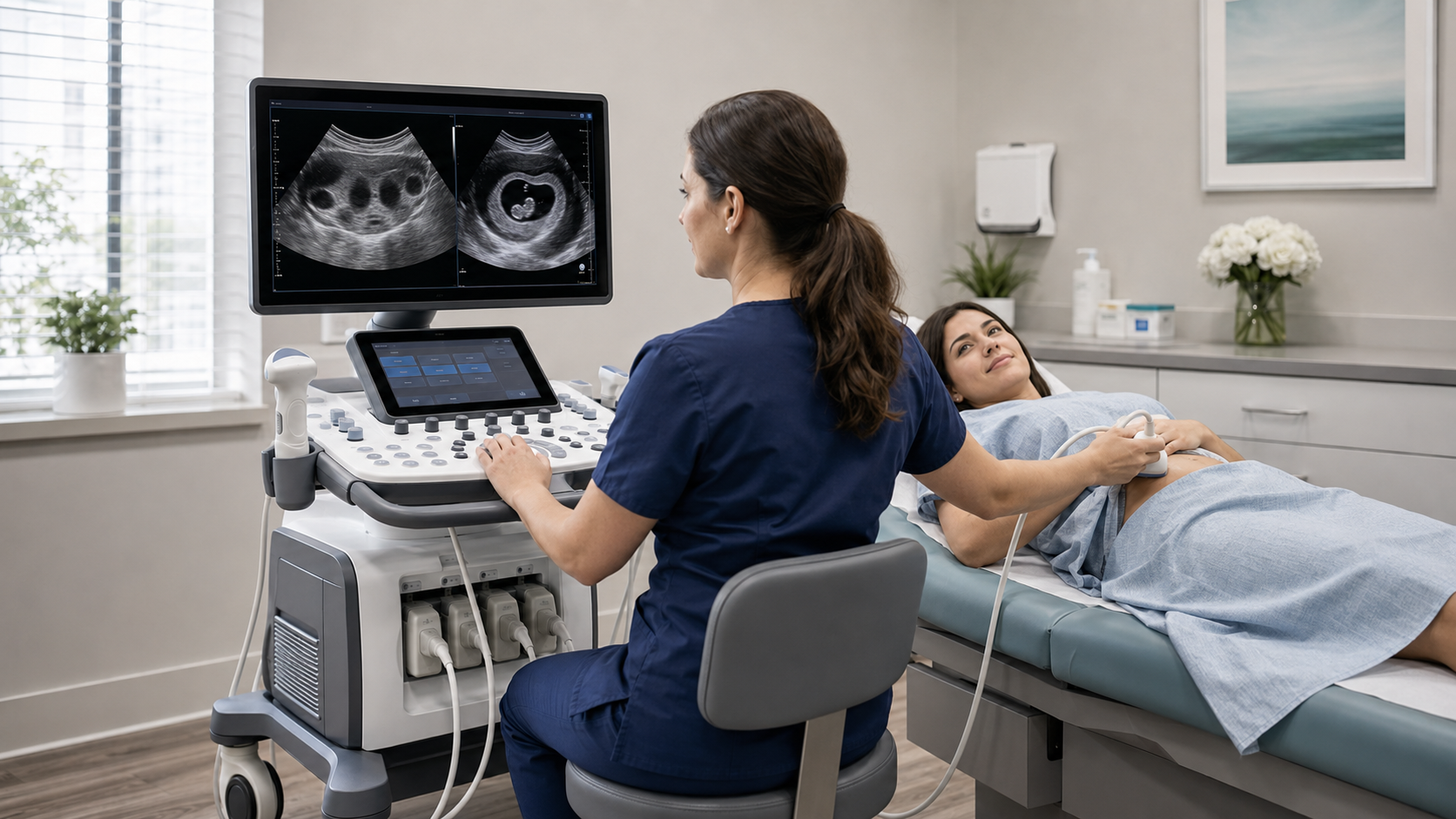
Choosing the right OB/GYN ultrasound machine requires a clear understanding of its clinical capabilities, available types, essential features, and overall cost. Whether you are comparing portable and cart-based systems or looking for a high-performance refurbished model at an affordable price, this guide will help you evaluate your options and find a suitable machine for your clinic or hospital.
What Is an OB/GYN Ultrasound Machine?
As its name suggests, an OB/GYN ultrasound machine is designed for two closely related areas of women’s healthcare: obstetrics and gynecology. It uses high-frequency sound waves to produce real-time images of internal anatomy without exposing patients to ionizing radiation. Depending on its configuration and compatible transducers, the system can support both transabdominal and transvaginal imaging.
Unlike a basic general-imaging system, an OB/GYN ultrasound machine includes dedicated examination presets, measurement packages, and software developed for women’s health imaging. These systems may offer fetal biometry tools, gestational calculations, gynecological measurements, Doppler modes, and optional 3D or 4D capabilities. Available as new, used, or refurbished ultrasound machines, they come in cart-based (console-based), compact, and portable designs to suit different clinical settings and workflows.
What Is an OB/GYN Ultrasound Machine Used For? (Medical Applications)
OB GYN ultrasound machines are designed to support a wide range of women’s health examinations, from monitoring pregnancy and fetal development to evaluating the uterus, ovaries, and other pelvic structures.
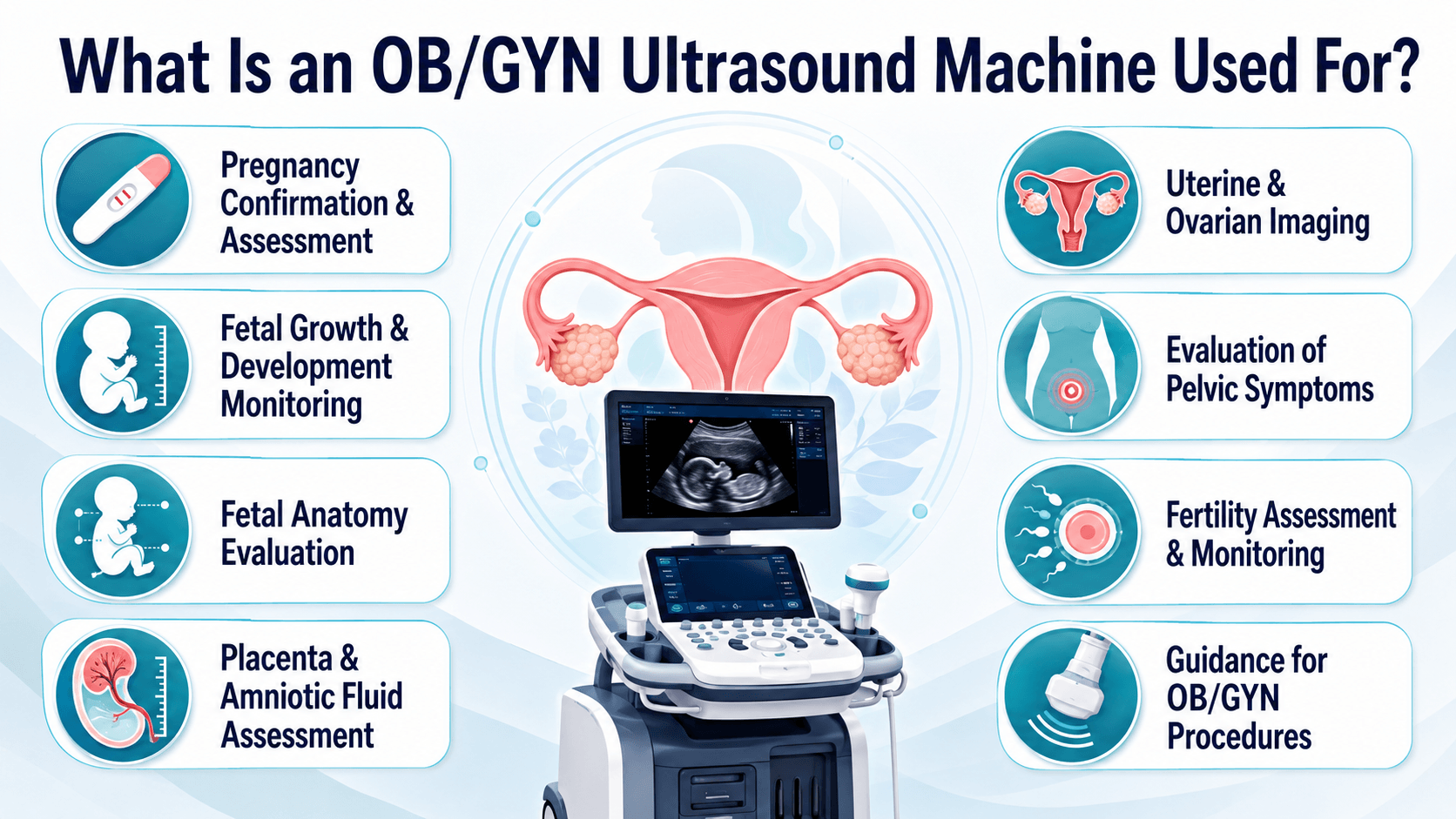
1- Pregnancy Confirmation and Assessment
These ultrasound machines can confirm an intrauterine pregnancy, estimate gestational age, identify multiple pregnancies, and assess early fetal development. It may also help clinicians evaluate fetal cardiac activity and the location of the gestational sac.
2- Fetal Growth and Development Monitoring
During pregnancy, an OB/GYN ultrasound machine can be used to measure fetal structures and monitor growth over time. For example, measurements of the head, abdomen, and femur can help estimate fetal size and weight.
3- Fetal Anatomy Evaluation
Detailed ultrasound examinations allow clinicians to examine fetal anatomy, including the brain, spine, heart, limbs, and internal organs. These scans can support the identification of possible structural abnormalities that may require further assessment.
4- Placenta and Amniotic Fluid Assessment
Ultrasound helps determine the placenta’s location and supports the evaluation of amniotic fluid volume. It may also be used to assess the relationship between the placenta, fetus, and cervix during pregnancy.
5- Uterine and Ovarian Imaging
In gynecology, ultrasound is used to visualize the uterus, endometrium, ovaries, and surrounding pelvic structures. It can assist in identifying findings such as uterine fibroids, ovarian cysts, or changes in endometrial thickness.
6- Evaluation of Pelvic Symptoms
OB/GYN ultrasound may be requested when a patient experiences pelvic pain, abnormal bleeding, or other gynecological symptoms. The real-time images help clinicians investigate possible structural causes and determine whether additional testing is needed.
7- Fertility Assessment and Monitoring
In fertility care, ultrasound can monitor follicle development, evaluate endometrial thickness, and assess the ovaries throughout a treatment cycle. Transvaginal imaging is commonly used because it provides detailed views of the reproductive organs.
8- Guidance for OB/GYN Procedures
Real-time ultrasound imaging can guide selected procedures by helping clinicians visualize anatomy and instrument placement. Examples include egg retrieval, embryo transfer, amniocentesis, and certain biopsies.
Types of Ultrasound Machines for OB/GYN Imaging
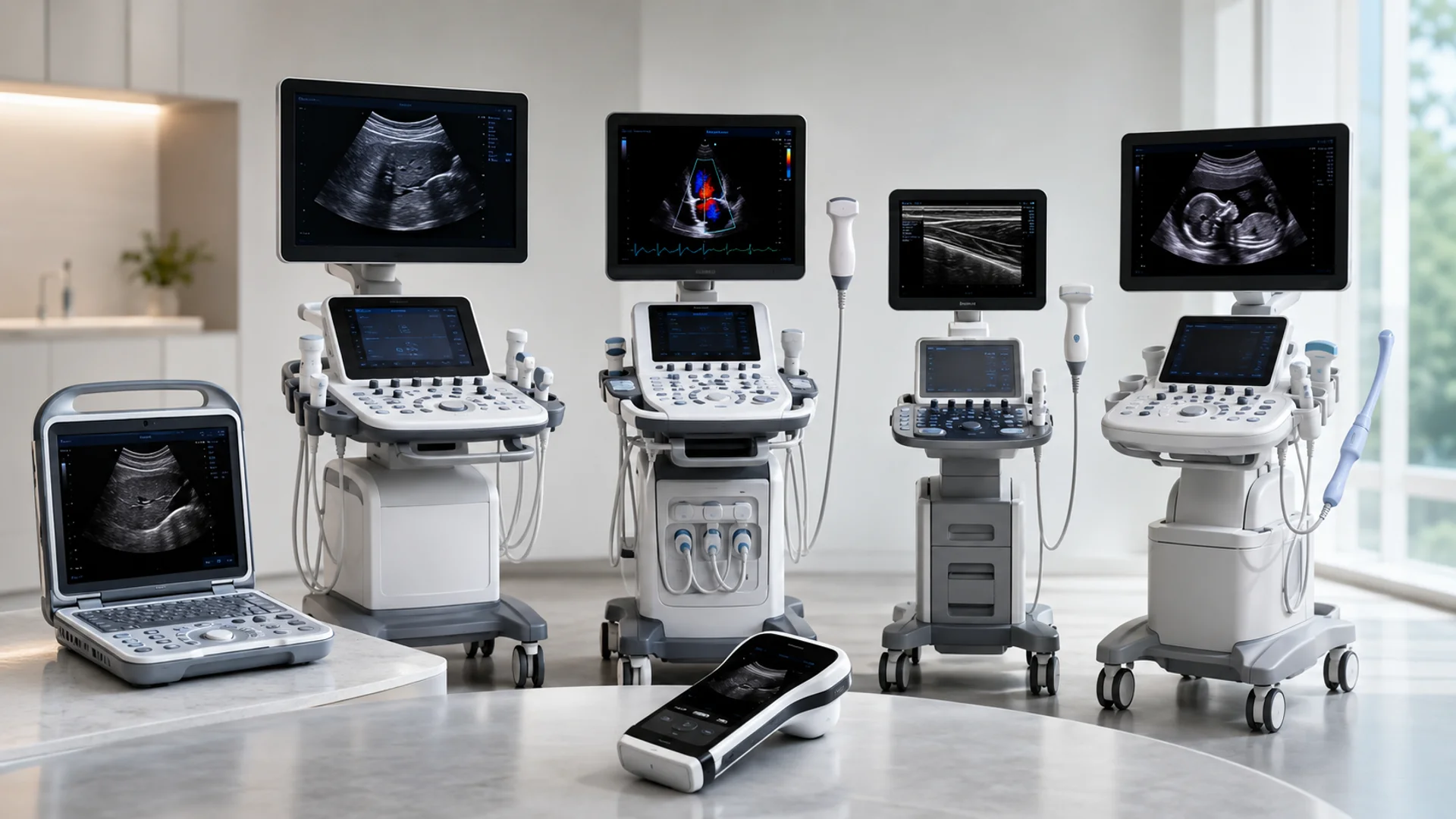
OB/GYN ultrasound machines are mainly available in cart-based and portable formats. Both can be configured for women’s health imaging, but their mobility, features, workflow capabilities, and space requirements make them suitable for different clinical environments.
Cart-Based OB/GYN Ultrasound Machines
Cart-based OB/GYN ultrasound machines are commonly used in hospitals, imaging departments, fertility centers, and busy clinics where detailed examinations are performed regularly. Their larger displays, multiple transducer ports, powerful image-processing technology, and support for advanced features such as Doppler and 3D/4D imaging can make examinations and reporting more efficient. However, they occupy more space, are harder to move between locations, and usually require a higher investment than portable systems.
Portable OB/GYN Ultrasound Machines
Portable OB/GYN ultrasound machines offer a more compact solution for smaller clinics, shared examination rooms, bedside imaging, and mobile healthcare services. Many models provide dedicated OB/GYN presets, Doppler modes, battery operation, and compatibility with convex and transvaginal probes while remaining easy to transport and store. Although their mobility and smaller footprint are valuable advantages, some portable systems may have smaller displays, fewer transducer ports, shorter battery life, or fewer advanced imaging and reporting features than full-sized cart-based machines.
| Feature | Cart-Based OB/GYN Ultrasound Machines | Portable OB/GYN Ultrasound Machines |
| Design | Full-sized system mounted on a wheeled cart | Compact, handheld or laptop-style system |
| Best suited for | Hospitals, imaging centers, fertility clinics, and high-volume practices | Smaller clinics, shared rooms, bedside imaging, and mobile services |
| Image processing | Usually offers higher processing power and more advanced imaging options | Provides reliable imaging, although capabilities vary by model |
| Display | Larger monitor for detailed image review | Smaller integrated display or external monitor support |
| Imaging features | Often supports advanced Doppler, 3D/4D imaging, and automated measurements | May support Doppler and 3D/4D imaging depending on the configuration |
| Portability | Can be moved between nearby rooms but is not designed for frequent transportation | Easier to carry and transport between rooms or locations |
| Cost | Generally more expensive due to its broader capabilities | Often has a lower initial purchase price |
| Space requirements | Requires more space in the examination room | Suitable for clinics with limited space |
| Main advantage | Advanced imaging capabilities and efficient high-volume workflow | Mobility, compact size, and flexible deployment |
| Main limitation | Higher cost and limited portability | Smaller display and potentially fewer advanced features |
Essential Features of an OB/GYN Ultrasound Machine
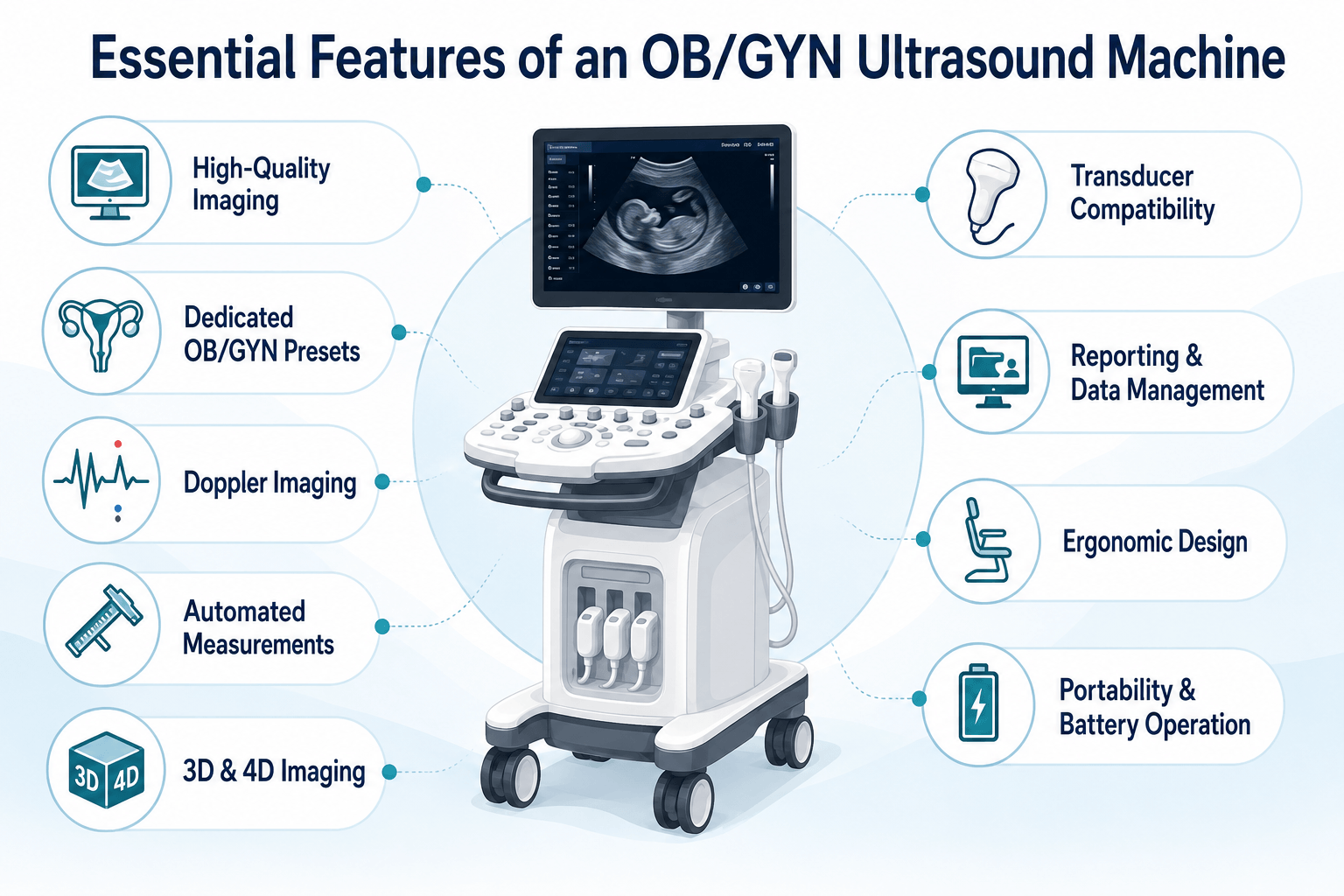
A suitable OB/GYN ultrasound machine should feature clear imaging, specialized clinical tools, compatible transducers, and an efficient workflow for obstetric and gynecological examinations.
- High-quality imaging: Strong resolution, tissue penetration, and image optimization help produce clear views across different examinations and patient anatomies.
- Dedicated OB/GYN presets: Specialized presets automatically adjust the system settings for common obstetric, gynecological, and fertility examinations.
- Doppler imaging: Color, power, and pulsed-wave Doppler modes support the assessment of blood flow in maternal, fetal, uterine, ovarian, and placental structures.
- Automated measurements: Built-in tools simplify fetal biometry, gestational calculations, estimated fetal weight, follicle measurement, and endometrial assessment.
- 3D and 4D imaging: Volume and real-time imaging capabilities provide additional visualization options for advanced obstetric and gynecological examinations.
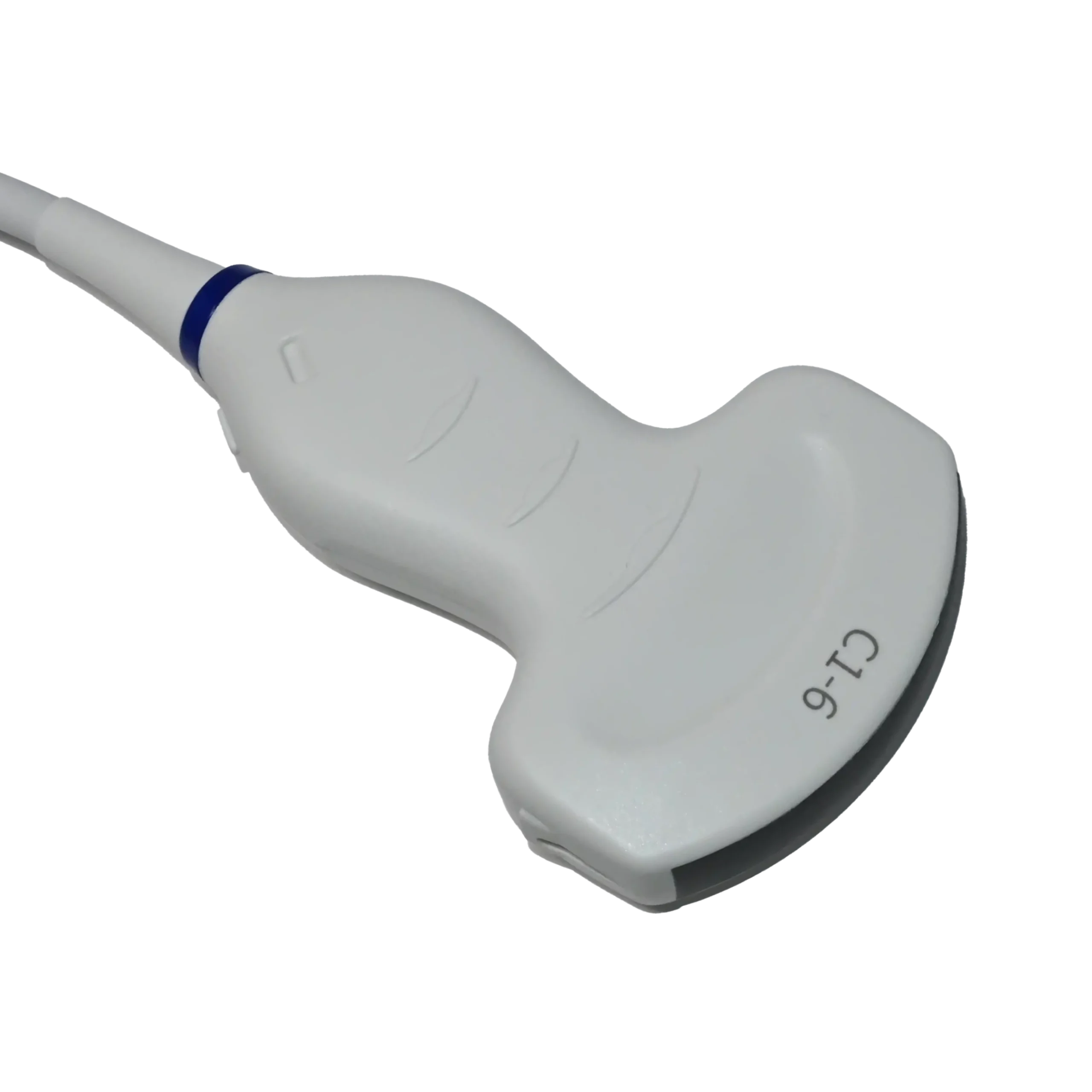
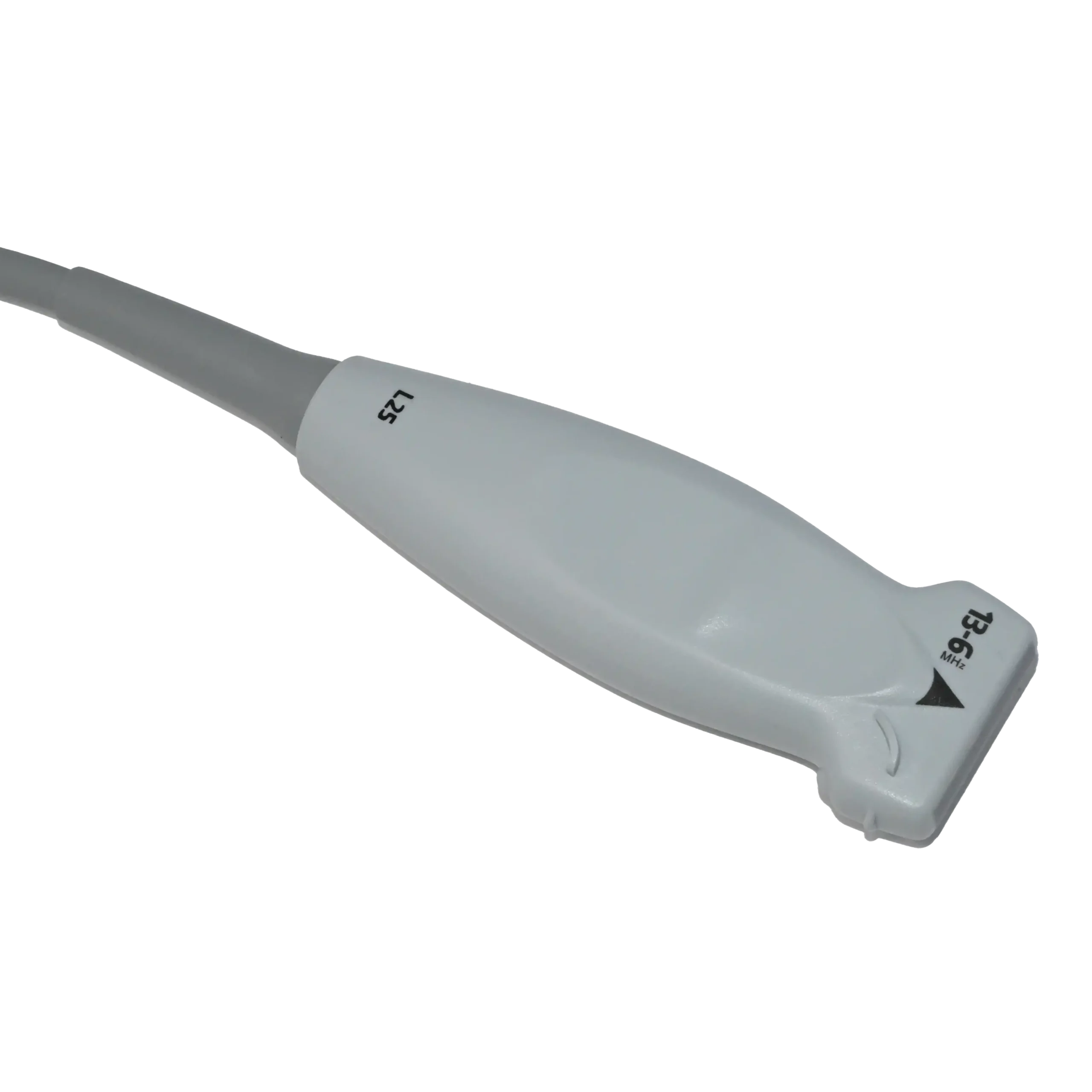
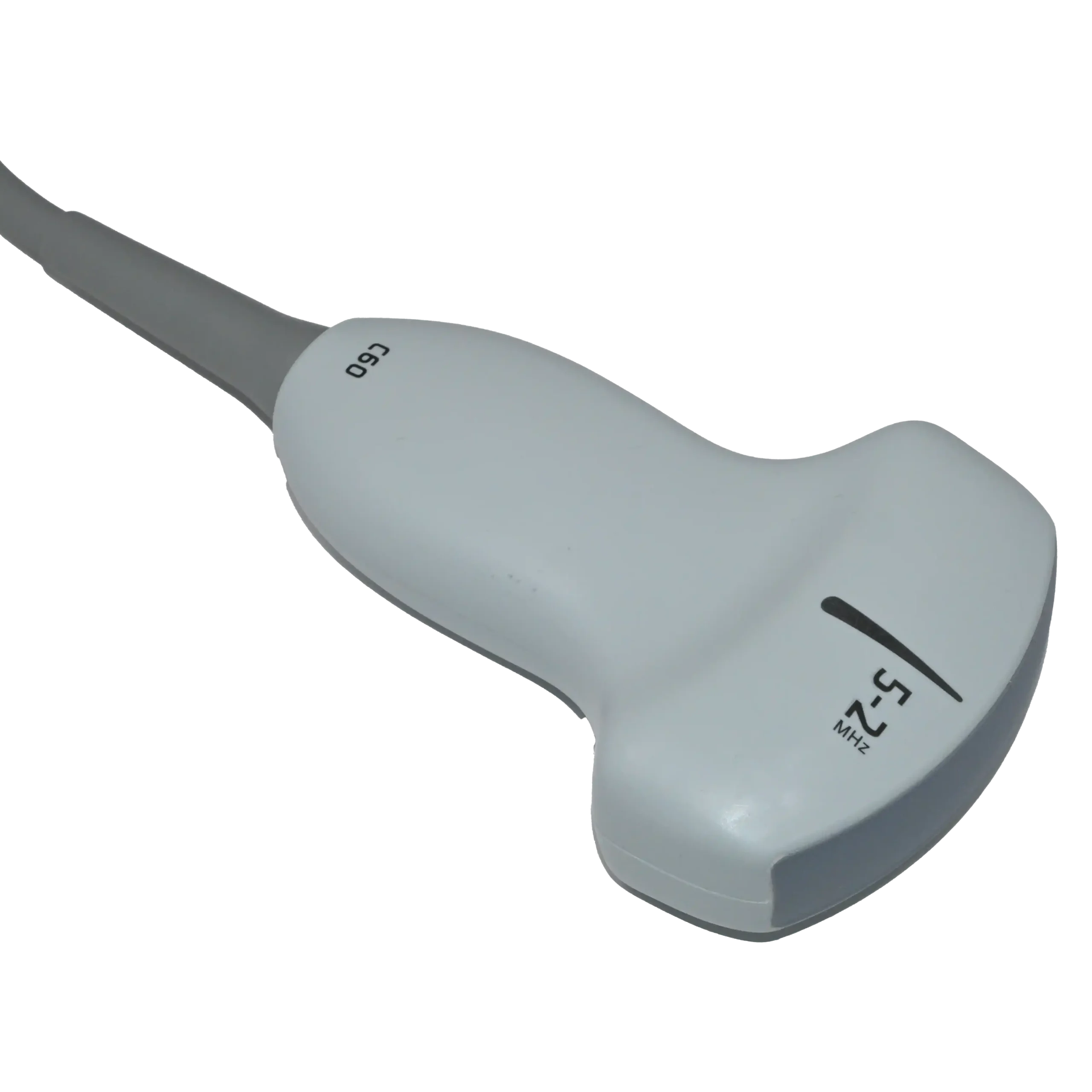
- Transducer compatibility: The machine should support the required convex, transvaginal, volume, linear, or specialty probes.
- Reporting and data management: Integrated reports, image storage, DICOM connectivity, and PACS support help organize and transfer examination data.
- Ergonomic design: An adjustable display, accessible controls, and an intuitive interface can improve operator comfort and workflow efficiency.
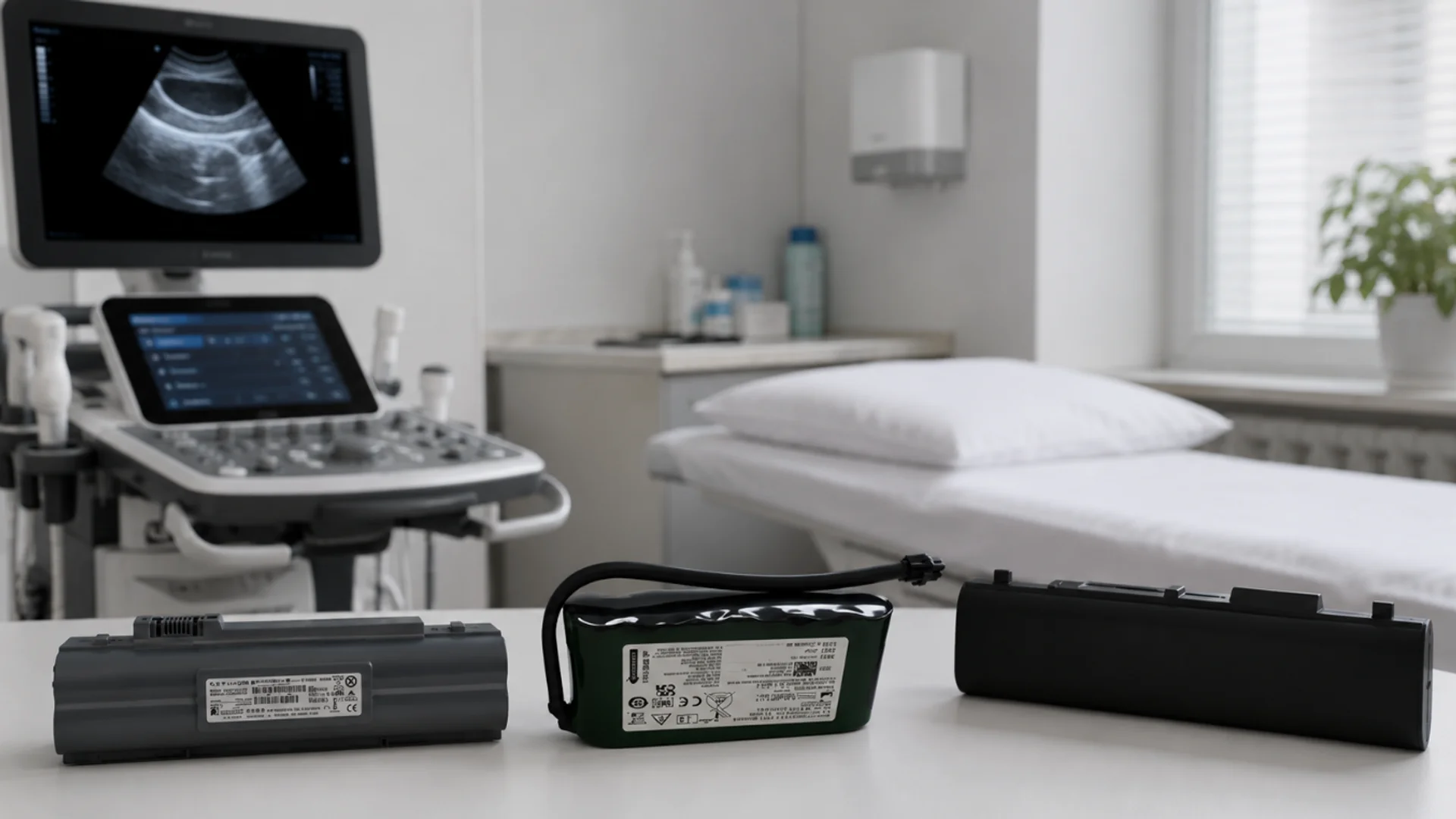
- Portability and battery operation: Compact dimensions, manageable weight, and reliable battery runtime are particularly important when the machine is used in multiple rooms or locations.
How to Choose the Best Ultrasound Machine for OB/GYN
Although the essential features discussed above provide a useful starting point, choosing the best ultrasound machine for OB/GYN also requires considering your budget, clinical environment, patient volume, and the support offered by the equipment supplier.
Choose a Reliable Supplier
Purchase from a supplier that provides clear information about the machine’s condition, configuration, included probes, and warranty coverage. Access to technical support, installation guidance, training, repair services, and compatible accessories can also make ownership more manageable.
Define Your Total Budget
Your budget should cover more than the base price of the ultrasound machine. Consider the cost of required transducers, software packages, shipping, installation, maintenance, and possible future repairs or upgrades.
Evaluate Your Clinical Environment
The available space and the way equipment moves through your facility can determine which type of OB/GYN machine is more practical. A cart-based (console-based) machine may be suitable for a dedicated examination room, while a portable model can work better in smaller clinics, shared rooms, or mobile imaging settings.
Consider Your Patient Volume
Hospitals and busy OB/GYN practices may benefit from a system with faster processing, multiple transducer ports, automated measurements, and integrated reporting tools. Clinics with a lower patient volume may find that a compact or mid-range machine provides the necessary capabilities without the cost of a premium platform.
Match the System to Your Services
Choose a configuration based on the examinations your facility performs most frequently. For example, a fertility clinic may prioritize high-resolution transvaginal imaging and follicular measurements, while a maternal-fetal medicine department may require advanced Doppler, fetal assessment tools, and 3D/4D imaging.
OB/GYN Ultrasound Machine Prices
OB/GYN ultrasound machine prices depend on the model, features, included transducers, and condition. Buyers can generally choose among new, used, and refurbished ultrasound machines based on their clinical needs and budget.
- New systems: These machines offer current technology and a manufacturer warranty but have the highest purchase price. They are suitable for facilities seeking the latest imaging features.
- Used systems: Used machines are more affordable than new equipment, but their condition and service history can vary. Buyers should inspect their performance and configuration carefully.
- Refurbished systems: Refurbished OB/GYN ultrasound machines provide greater affordability while offering a more controlled purchasing option than equipment sold simply as used. A professionally refurbished system should be inspected, tested, cleaned, and repaired when necessary before being offered with clear warranty terms.
Ultimately, the right choice is the system that provides the required clinical capabilities at a manageable total cost.
| Condition | Price Level | Main Advantages | Points to Consider |
| New | Highest | Latest technology, current software, and manufacturer warranty | Requires a larger initial investment |
| Used | Lower | More affordable than a new machine | Condition, service history, and remaining lifespan may vary |
| Refurbished | Moderate | Greater affordability, professional inspection, testing, and possible warranty coverage | Refurbishment quality depends on the supplier |
Best Refurbished Ultrasound Machines for OB/GYN Imaging
Here are some of the best refurbished ultrasound machines to consider for OB/GYN imaging based on their configuration, compatible transducers, and available software:
- Sonosite M-Turbo OB/GYN: Refurbished Sonosite M-Turbo OB/GYN ultrasound is configured for obstetric and gynecological examinations and supports efficient imaging across different clinical settings.
- Sonosite PX: Refurbished Sonosite PX ultrasound combines portability, an intuitive interface, and point-of-care imaging capabilities for flexible clinical use.
- GE Healthcare Vivid i: Refurbished GE Healthcare Vivid i Ultrasound portable system offers advanced imaging and Doppler capabilities, although its suitability for OB/GYN examinations depends on its software and probe configuration.
- Philips Affiniti 50: Refurbished Philips Affiniti 50 ultrasound provides strong image quality, automated workflow tools, and support for a broad range of women’s health examinations.
- Sonosite Edge II OB/GYN Ultrasound: Refurbished Sonosite Edge II OB/GYN Ultrasound combines a durable portable design with dedicated OB/GYN capabilities for examinations in clinics, hospitals, and point-of-care environments.
Where to Buy an OB/GYN Ultrasound Machine?
There are various medical equipment suppliers offering OB/GYN ultrasound machines in different models, configurations, and conditions. If you are looking for greater affordability without compromising clinical performance, Elzhen is one of the best places to purchase professionally refurbished ultrasound machines for obstetric and gynecological imaging.
Elzhen supplies its refurbished systems with a one-year warranty and provides repair, technical support, and after-sales services to help customers manage their equipment with confidence. Depending on your purchasing process, you can place an order directly through the website, submit a purchase order (PO), contact the sales team by phone, or request a personalized quote based on your preferred machine, probes, and configuration.




One Response
Thank you very much I found it very helpful!